


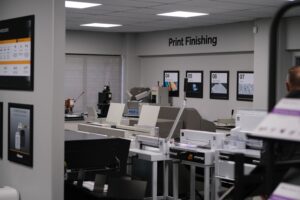
You Print It, We Finish It!
Introduction
Welcome to the world of print finishing! At Fellowes Beswick, we understand that stepping into the printing and packaging industry can feel overwhelming. transforming ordinary printed materials into polished, professional, and impactful finished products. While quality printing forms the foundation, it’s the finishing touches that truly elevate your materials from forgettable to memorable, creating lasting impressions on your audience.
What Is Print Finishing?
Print Finishing is the final stage of the printing process, where various techniques are applied to enhance printed materials’ look, feel and durability. It includes multiple processes which can transform ordinary printed materials into polished, professional, and impactful finished products with texture, protection and different professional, high-quality appearances for products.
Simply put, print finishing encompasses all the processes that happen after the ink has dried on your printed materials. These techniques enhance your printed products’ appearance, durability, functionality, and overall quality. From basic trimming to elaborate embellishments, proper finishing adds tremendous value to your printed materials, helping them stand out in today’s competitive marketplace.
4 Reasons Why Print Finishing Matters
1. Enhanced Visual Appeal
First impressions count! Well-executed finishing techniques transform ordinary printed materials into eye-catching, professional products that capture attention immediately. The right finish emphasizes design elements, creates visual contrast, and adds depth to your printed pieces.
2. Improved Durability and Longevity
Many finishing techniques serve practical purposes by protecting your printed materials from wear and tear, moisture, and other environmental factors. This protection is particularly important for items that will be handled frequently or displayed in challenging conditions.
3. Elevated Brand Perception
Premium finishing techniques communicate quality and attention to detail, reflecting positively on your brand. Research shows that consumers associate the tactile quality of marketing materials with the perceived quality of the brand itself, making finishing a crucial component of brand perception.
4. Enhanced User Experience
Beyond aesthetics, finishing improves the functionality and usability of printed materials. Techniques like folding, binding, and die-cutting help create intuitive user experiences that guide readers through content effectively.
11 Different Print Finishing Techniques & Applications
1. Perforation
Perforation creates rows of small holes in paper or card stock, allowing for easy and clean tearing along a specific line. This technique is essential for:
- Tear-off response forms and coupons
- Ticket stubs
- Easy-to-separate documents like tax forms
- Event tickets with detachable sections
At Fellowes Beswick, our perforation equipment offers adjustable perforation patterns to match your specific requirements, ensuring clean tears without compromising document integrity. See all our solutions here
2. Creasing
Creasing in print finishing is the process of creating a fold line on paper to ensure a clean, accurate and crack-free fold. This technique is crucial for:
- High-quality brochures and presentation folders
- Greeting cards and invitations on thick stock
- Product packaging
- Menu covers and heavy card applications
Our precision creasing solutions ensure professional results on stocks up to 400 gsm, maintaining the premium look of your printed materials.
3. Folding
Folding transforms flat printed sheets into multi-folded pieces with dimension and functionality. Most commonly used for brochures, leaflets, flyers, etc. Common fold types include:
- Half fold (single fold creating two panels)
- Tri-fold (two parallel folds creating three panels)
- Z-fold (accordion-style with parallel folds in opposite directions)
- Gate fold (outside panels fold inward toward the center)
- French fold (combination of horizontal and vertical folds)
- Engineering fold (specialized for technical drawings and maps)
Fellowes Beswick offers automated folding solutions ranging from entry-level desktop folders to high-volume production systems capable of handling multiple fold types.
4. Numbering
Numbering applies sequential numbers to printed documents, essential for:
- Invoice and receipt books
- Raffle tickets and competition entries
- Limited edition prints or collectibles
- Multi-part forms
- Event tickets and admission passes
Our numbering systems offer various numbering styles, customizable sequences, and integration with other finishing processes.
5. Binding
Binding unites multiple pages into a cohesive document, with various methods offering different benefits:
5.1 Wire Binding
Metal wire loops inserted through punched holes create documents that lay flat when open. Ideal for:
- Manuals and cookbooks
- Presentations and proposals
- Calendars
- Technical documentation
5.2 Comb Binding
Plastic combs inserted through rectangular holes bind documents together. Benefits include:
- Pages can be added or removed later
- Available in multiple colors for brand matching
- Cost-effective for medium-run documents
- Good for documents up to 425 sheets
5.3 Spiral Binding
Coiled metal or plastic threaded through punched holes creates durable, lay-flat documents perfect for:
- Notebooks and student materials
- Reports and presentations
- Instruction manuals
- Training materials
5.4 Stitching
Using wire staples to secure pages together, stitching comes in several forms:
- Saddle stitching (staples along the fold for booklets)
- Corner stitching (single staple in document corner)
- Side stitching (staples along the edge)
- Loop stitching (specialized staples that form loops for ring binders)
Booklet makers, as an example of specialized machines, combine folding and stapling operations to create finished booklets in one process, ideal for:
- Event programs
- Catalogs and magazines
- Multi-page brochures
- Annual reports
5.5 Sewing
Thread sewing provides exceptional durability for premium publications:
- High-end books and publications
- Archival documents
- Art books and portfolios
- Documents that need to withstand frequent handling
5.6 Case Making
Creating hardcover cases for books and premium documents:
- Corporate reports and presentations
- Thesis binding
- Portfolio presentation
- Premium product catalogs
5.7 Calendar Rimming
Specialized finishing for calendars, including:
- Adding wire or plastic hanging mechanisms
- Thumb-cut notches for easy page turning
- Reinforced hanging holes
- Special corner treatments
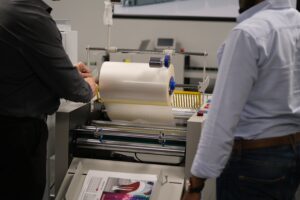
6. Laminating
Lamination applies a protective plastic film to printed materials, enhancing durability and appearance:
6.1 Roll Laminating
Continuous lamination process ideal for high-volume applications:
- Large format prints and posters
- Menu cards
- Educational materials
- Retail signage
6.2 BOPP Laminating
Biaxially Oriented Polypropylene film offers exceptional clarity and durability:
- Marketing collateral requiring crystal-clear finish
- Book covers
- Packaging materials
- Premium presentation folders
6.3 PET Laminating Film
Polyethylene Terephthalate films provide superior strength and chemical resistance:
- Outdoor signage
- Materials exposed to harsh conditions
- Industrial documentation
- Maps and durable guides
6.4 Pouch Laminating
Individual documents are placed in plastic pouches and fed through heated rollers:
- ID cards and badges
- Menu cards
- Instructional materials
- Small-format reference materials
6.5 UV Coating
Liquid coating cured with ultraviolet light creating high-gloss or selective finishes:
- Book covers
- Packaging
- Direct mail pieces
- Business cards and marketing collateral
7. Cutting
Precision cutting machines for straight, clean cuts through paper stacks:
- Industrial models for high-volume production
- Programmable models for repeat cutting tasks
- Safety-focused designs for workplace security
- Models with various cutting widths from desktop to industrial scale
At Fellowes Beswick, we offer guillotines with optical cutting lines, programmable back gauges, and safety features to ensure precise, safe operation.
An example of specialized cutting machines for smaller format materials would be card cutters for:
- Business cards
- Postcards
- Membership cards
- Flash cards and game cards
Our card cutters offer precision alignment guides, multiple-card layouts, and efficient production of consistently sized cards.
Another example of specialised cutting is corner rounding of printed materials:
- Business cards
- ID badges
- Children’s books and educational materials
- Marketing materials requiring a softer look
Fellowes Beswick provides corner rounders with various radius options and the ability to process multiple sheets simultaneously.
8. Trimming
Precision cutting tools for smaller jobs or specialized cuts:
- Rotary trimmers for straight, clean cuts
- Guillotine-style trimmers for small batch processing
- Specialty trimmers for unique cutting patterns
- Portable options for on-site finishing
9. Other Finishing Techniques
10 Paper Drilling
Creating precision round holes through thick stacks of paper:
- Documents for ring binders
- Architectural plans
- Technical documentation
- Post-binding systems
10.1 Collating
Organizing printed sheets into the correct sequence for binding or distribution:
- Multi-page documents
- Custom book assembly
- Kits and information packets
- Direct mail campaigns with multiple inserts
10.2 Paper Jogging
Aligning stacks of paper perfectly for subsequent processes:
- Pre-guillotine alignment
- Preparation for binding
- Neatening stacks before packaging
- Removing static and air between sheets
10.3 Foiling
Applying metallic or colored foil to printed materials for a decorative effect:
- Book covers
- Certificates and awards
- Premium packaging
- Business cards and invitations
11. Shredding – Waste Management in the Print Finishing Process
Secure destruction of sensitive documents and print waste:
- Standard cross-cut for general waste
- Micro-cut for highly sensitive materials
- High-security options for confidential information
- High-capacity systems for production environments
Fellowes Beswick offers comprehensive waste management solutions for print finishing operations of all sizes, from small office shredders to industrial shredding solutions. View our full range of solutions here.

Integrating Print Finishing into the Design & Printing Process
For best results, we at Fellowes Beswick recommend considering finishing techniques during the design phase rather than as an afterthought:
- Request samples of different finishing options to see and feel the effects
- Consider how finishes will interact with your colors and design elements
- Allow for necessary margins and bleeds based on finishing requirements
- Design with the physical experience in mind, considering how your piece will be handled
3 Steps To Help You Select The Right Finishing Techniques & Machinery
As your trusted partner in print finishing, Fellowes Beswick recommends considering these factors when choosing finishing options:
1. Project Purpose and Lifespan
Consider how long your printed piece needs to last and under what conditions it will be used. Items that will be handled frequently or used outdoors require more durable finishing options.
2. Target Audience
Your finishing should align with your audience’s expectations. Premium brands often benefit from luxury finishes like embossing and foiling, while other brands might prefer only 1 type of finish.
3. Budget Considerations
Some finishing machinery and techniques add significant cost to printing projects. This is due to the capabilities of what production rate is required, machinery speed, its functionality and its ability to maximize impact in your business. Balancing your needs and budget is where Fellowes Beswick can guide you to find the solution for your unique needs and business.
Using these 3 steps when considering what machinery and capabilities your business needs will make your print finishing journey that much smoother for your business.
Conclusion
Print finishing is where ordinary printed materials transform into extraordinary marketing tools, premium products, and memorable experiences.
By understanding the range of available options and thoughtfully applying them to your print projects, you can create materials that not only look professional but also effectively communicate your brand values and message.
Whether you’re producing business cards, packaging, marketing collateral, or signage, investing in appropriate finishing techniques ensures your printed materials make the impact you intend. In today’s increasingly digital world, well-executed print materials with tactile finishing touches offer a unique opportunity to create meaningful connections with your audience.
Ready to Transform?
At Fellowes Beswick, we’re committed to helping you navigate the world of print finishing with confidence.
Our comprehensive range of machinery and consumables—coupled with our expert guidance—ensures that your printing projects achieve professional, impactful results every time.
Contact Fellowes Beswick today to discuss your print finishing needs. Our team of specialists will guide you through the selection of machinery and consumables that will help your business deliver exceptional printed materials.
Visit our website or call us to speak with a print finishing expert who can help take your print projects to the next level!
If you are interested in seeing our other divisions, see our page here:
https://fellowesza.co.za/our-divisons/


